
Chalk Streams in Crisis
Despite the rarity and value of chalk streams, these precious and unique freshwater ecosystems are at risk. The Chalk Streams in the Chilterns are widely regarded as amongst the most threatened in the UK.
Where has the river gone?
Chalk streams face several threats but the biggest by far is low flows. They are quite simply dying from a lack of water.
Weather plays a big part. When we experience below average rainfall in the winter the aquifer does not fill up, and springs run dry. Climate change could lead to an increasing frequency of droughts in the south east.
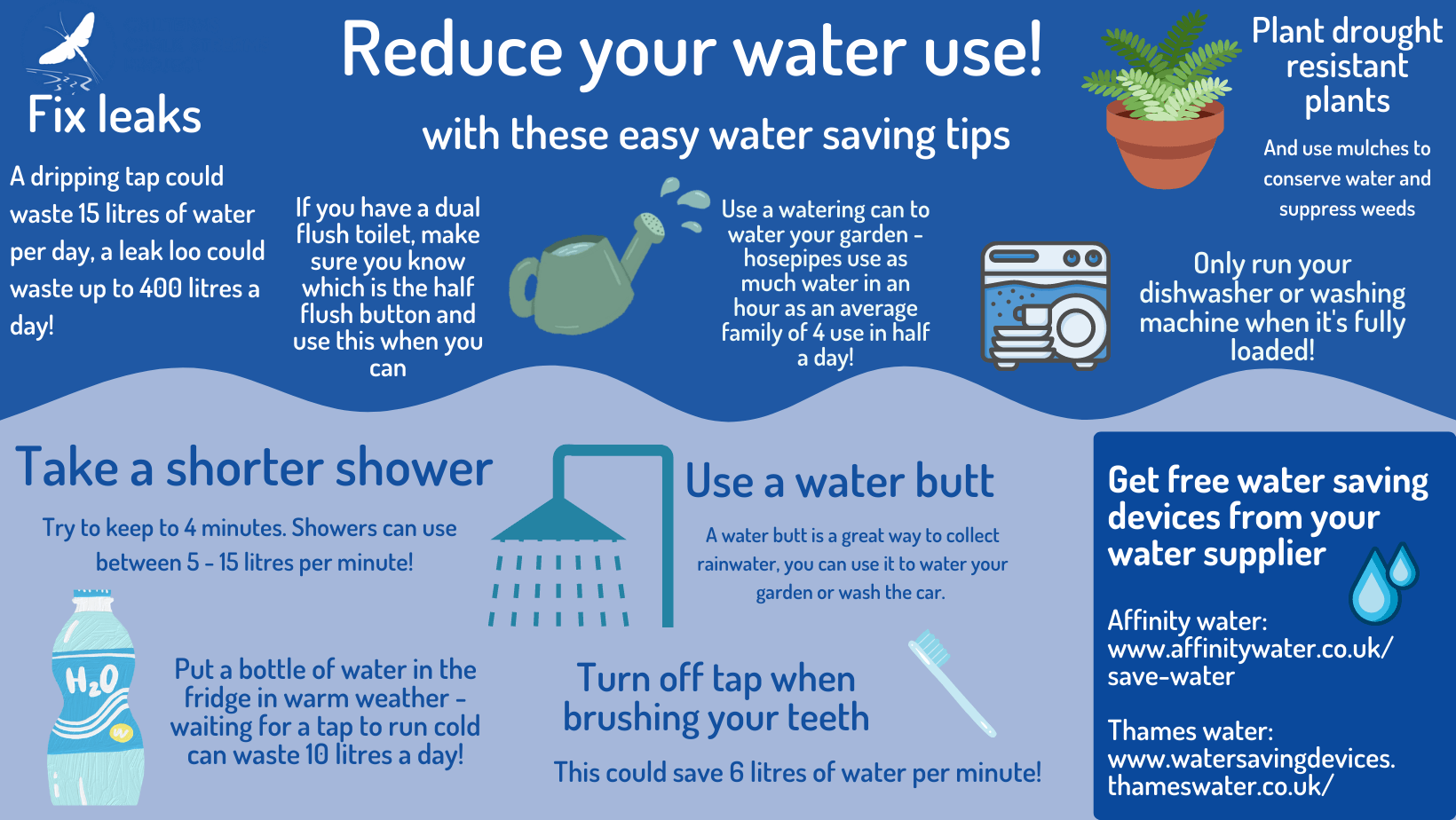
Across the Chilterns we also pump our drinking water from the chalk aquifer. The more we use, the less is available for the rivers. Parts of the Chilterns has the highest water use in Europe (173 litres per person per day – over 30 litres per day above the UK average). Development and population growth will only increase the amount we take.

Pollution
Pollution can arise from activities that take place around the river. Hard surfaces such as pavements and roads speed up the flow of rain to the river, both over the surface and through networks of pipes. This urban runoff can change the flow of water, flows can become less stable as the river rises and falls quickly in response to rainfall. These changes to flow can impact the health of plants and river wildlife. The runoff can also carry sediment from the road including material from our vehicles – introducing metals and hydrocarbons (oils and greases from cars and fuels) to the river.
The wastewater (from our sinks, showers, washing machines, dishwashers and baths) along with sewage from our homes is pumped to the local sewage works. At the treatment works the sewage is treated using biological and chemical processes, then the treated effluent is discharged to the river. Appropriate operation of the sewage treatment works and using water wisely is critical to the health of our rivers.
Invasive non-native species
A number of non-native species thrive in our river habitats, and chalk streams are no exception. Invasive plants such as Himalayan balsam and giant hogweed can outcompete native plants, threatening the animals that depend on them.
The presence of invasive signal crayfish has wiped out the native White-clawed crayfish in the Chilterns. American mink have been a major contributor to the sharp decline in water vole numbers.
What can we do?
The Chilterns Chalk Streams Project delivers practical projects and offers management advice to help look after local rivers.
There’s lots you can do as an individual too. Find out more about the everyday actions you can take to help protect local rivers. Or get involved as a volunteer with your local river group.
Take Action: Save Water
It may not always feel like it, but we live in one of the driest areas of the UK. The Chilterns area actually has less water available per person than Morocco, South Sudan and Brisbane in Australia.
This area also has one of the highest rates of water use per person in Europe. This clearly isn’t a good combination, particularly for the globally rare chalk streams that (should) flow here. There’s only so much water to go around – the more water we pump out of the ground for our own use, the less is left for the local rivers.