
Brilliant Biofilms! New research report
If you pick up a rock in the river, it will often feel ‘slimy’ – this coating is actually a living community of fungi, algae and bacteria known as a biofilm. Biofilms are understudied parts of chalk river ecosystems, but recent research by Erin Doyle at Cranfield University is helping to shine the light on these microscopic worlds and what they can reveal about the health of our rivers.
Last winter, some of our citizen science volunteers helped collect biofilm samples to support ErinDoyle’s PhD research. The citizen scientists went out after events such as heavy rain or pollution incidents to take samples across the following four weeks, scrubbing rocks to remove biofilms which were then frozen and sent to Erin for analysis. The collaboration between citizen science and research institutions was really helpful, enabling us to gather insight into our rivers from laboratory techniques we do not have access to, and providing valuable insights and samples for the Cranfield University team. As Erin explains “Short-lived events are difficult for a small research team to capture. During autumn and winter 2025, volunteers used their local knowledge to identify events and collected 231 biofilm samples from 23 sites on the Rivers Chess, Misbourne, Ver, and Red. Together, the samples represented 25 events.”
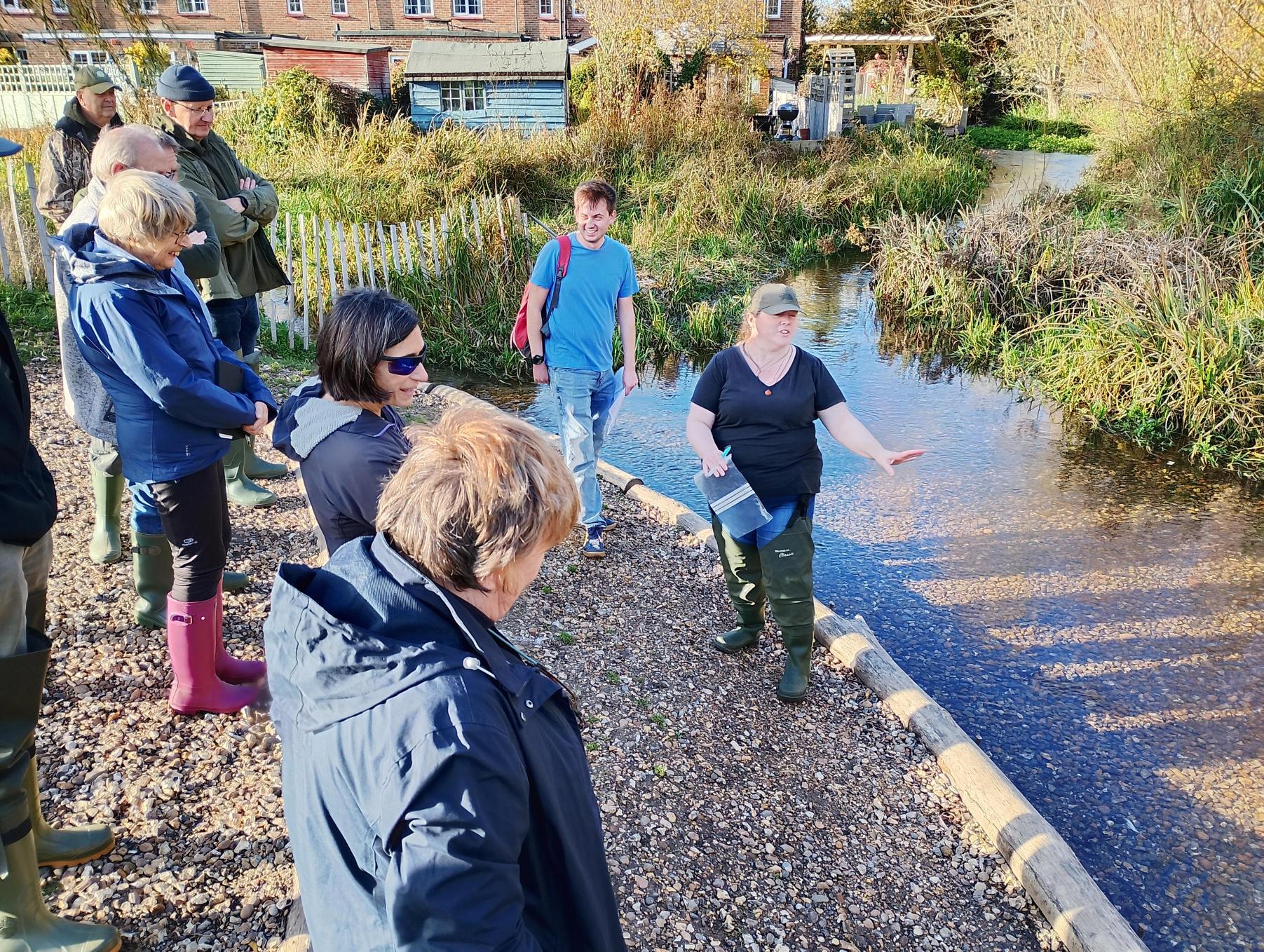
Erin Doyle leading biofilm sample collection training for CCSP citizen scientists (C: Iona McMillan)
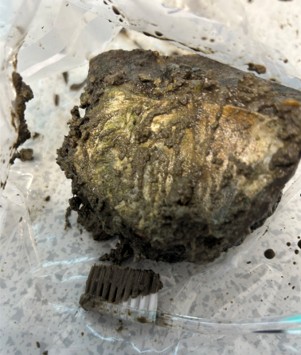
A thick biofilm being collected by scrubbing a stone using a new toothbrush (C: Erin Doyle)
Some key early findings from this research include:
The impact of land use
“Initial comparisons suggested that bacterial community profiles differed according to dominant upstream land use. Agricultural and forest-fragment samples contained larger shares of bacterial families commonly associated with plants and soils, while urban samples contained higher proportions of some families that include anaerobic organisms.”
Potential sewage indicators
“On the River Misbourne, Aquirickettsiella and Sphingorhabdus accounted for larger shares of sequence reads downstream of the wastewater treatment works than upstream. On the River Chess, however, Aquirickettsiella accounted for a smaller share downstream. Several bacterial families previously reported in sewage sludge were more prominent in the second and third post-event samples than in the first. These observations are useful leads, but they do not establish the bacteria’s source or the cause of the changes.”
Complex patterns and lack of one consistent post-event signal across rivers
“No single bacterial genus responded consistently across the three larger rivers. The River Red provided an intriguing lead, but further testing is needed”
Download the full report below!
Click below to open a summary update of her findings in the Ver, Red, Misbourne, and Chess – including graphs which show the different taxonomic groups identified at each site
If you have any questions about this, or are interested in collaborating with us on research, then please email chalkstreams@chilterns.org.uk
 What can river biofilms tell us after an environmental event?