

Go with the flow – get involved with CrowdWater!
Help us track chalk stream flow regimes
Chalk streams have unique hydrogeology – they are fed from springs bubbling up from the chalk aquifers. This means as groundwater levels fall, they can dry up, with many chalk streams having ‘winterbourne’ sections which dry up as part of a natural cycle. However, flow regimes have been altered in many ways including climate change, over-abstraction and physical modification. In the context of increasing heatwave and drought conditions, it is more crucial than ever to understand how our rivers will response – and we need your help!
If you are out walking along one of the beautiful Chiltern chalk streams, you can play a vital part to help protect them just by taking a photo and a couple of minutes to upload it to CrowdWater, an international citizen science app. You can make a one-off observation, or for more impact pick a site(s) that you can visit regularly so that you can take photos of the same site every month or week to track changes over time. If you are already involved in other river activities, such as Riverfly monitoring, you could combine your CrowdWater posting with when you are already monitoring, make it in to a regular walk, or share with a group.
Click below to download a PDF with instructions on how to use CrowdWater to record Temporary Streams, and visit the CrowdWater website for more information on the scheme.
For any questions on getting involved with using CrowdWater to monitor chalk stream flows, please email us chalkstreams@chilterns.org.uk
Download instructions on how to use CrowdWater here
 CrowdWater Instructions
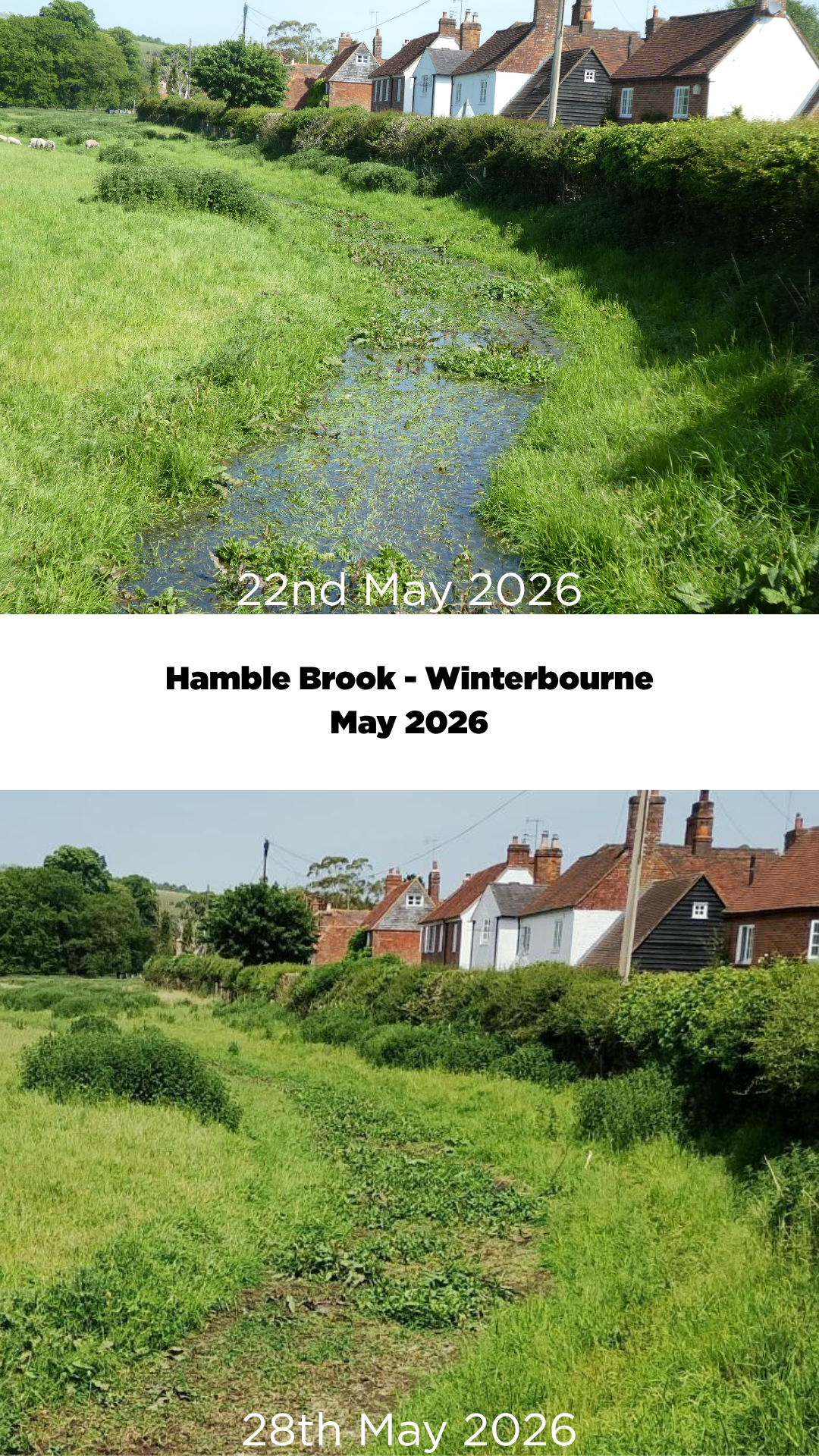
CrowdWater in action! Documenting drying patterns on the Hamble