

Phosphate Investigations Update
We have been continuing our investigation into Phosphate levels in the River Chess using citizen science data, keep reading to find out the latest results!
What is it? Where does it come from?
The River Chess, one of our precious chalk streams, like many rivers faces pressures from excess nutrients including phosphates and nitrates. Phosphate is one of the major problems in the Chess, with the Environment Agency rating the Phosphorus status as ‘Poor’ – one of the key factors preventing the river from achieving ‘Good’ overall ecological status. Phosphates have multiple sources including agricultural runoff, domestic products, and sewage. Excessive phosphates can cause a process called ‘eutrophication’ by triggering algal blooms which reduce oxygen in the water and make conditions harmful for fish, insects, plants and other wildlife.
Improvements to a major source
Effluent from the Chesham Sewage Treatment Works has been identified as one of the major sources. Effluent is treated discharge that has gone through the sewage treatment process and is legally released back into the river. However, even after the standard treatment processes, effluent can still be high in phosphate. In response the Environment Agency tightened the sites phosphorus permit from 2.0 mg/l P to 0.25 mg/l P at point of discharge from December 2024. Thames Water completed a £20m upgrade to Chesham Sewage Treatment works to meet this new limit, and increase the flow-to-treatment capacity from 241 litres per second to 353l.
In December 2025 we bought together data from our citizen scientists and research partners to examine impacts of the phosphorus stripping one year on. The initial signs were promising. There was a significant drop in phosphate levels in the river, although there were lingering effects and the ecology had yet to recover. You can read the full report here – The impact of phosphorus stripping at Chesham Sewage Treatment Works on water quality and ecology in the Chess | Smarter Water Catchment
This Spring we returned to one of the sites investigated last Autumn, to check if the reduction of phosphate had continued. The timing was especially important, as Thames Water had experienced an operational issue at Chesham Sewage Treatment Works, meaning that the levels of phosphorus in the continuous discharge from the site were affected, from late April to mid-May. During this time the River Chess Association recorded high phosphate levels of up to 0.26 mg/l PO4-P.
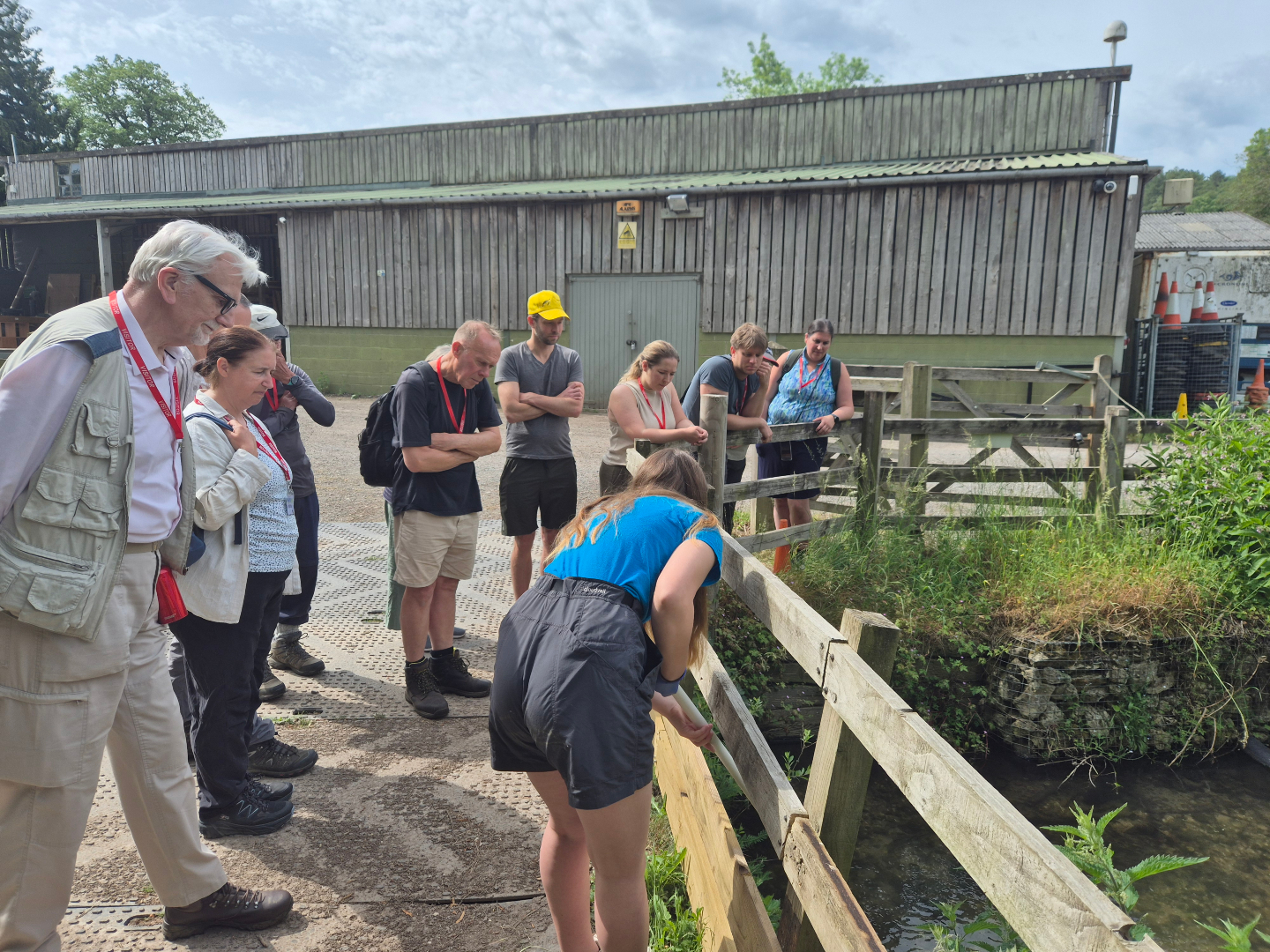
Training citizen scientists to collect water samples at the nutrient testing day
Citizen Science Investigation!
We returned to the beautiful Restore Hope Latimer site at the end of May to run a nutrient blitz testing event as part of Herts Rivers Week. This was part of our ‘NOSES’ survey technique, with volunteers sent out to collect water samples which we then tested on Hanna Instruments photometers. Thank you to everyone who came along to the day, it was great fun and collected some valuable data!
Latimer Park is a very useful ‘laboratory’ as we can compare phosphate levels between the relatively unpolluted Little Chess, with the Main Chess, which receives the Chesham sewage treatment works effluent, to compare the phosphorus impact of the treatment works with background levels. In October 2025 there was no statistically significant difference between the Little Chess and Main Chess, suggesting the phosphorus stripping had been successful.
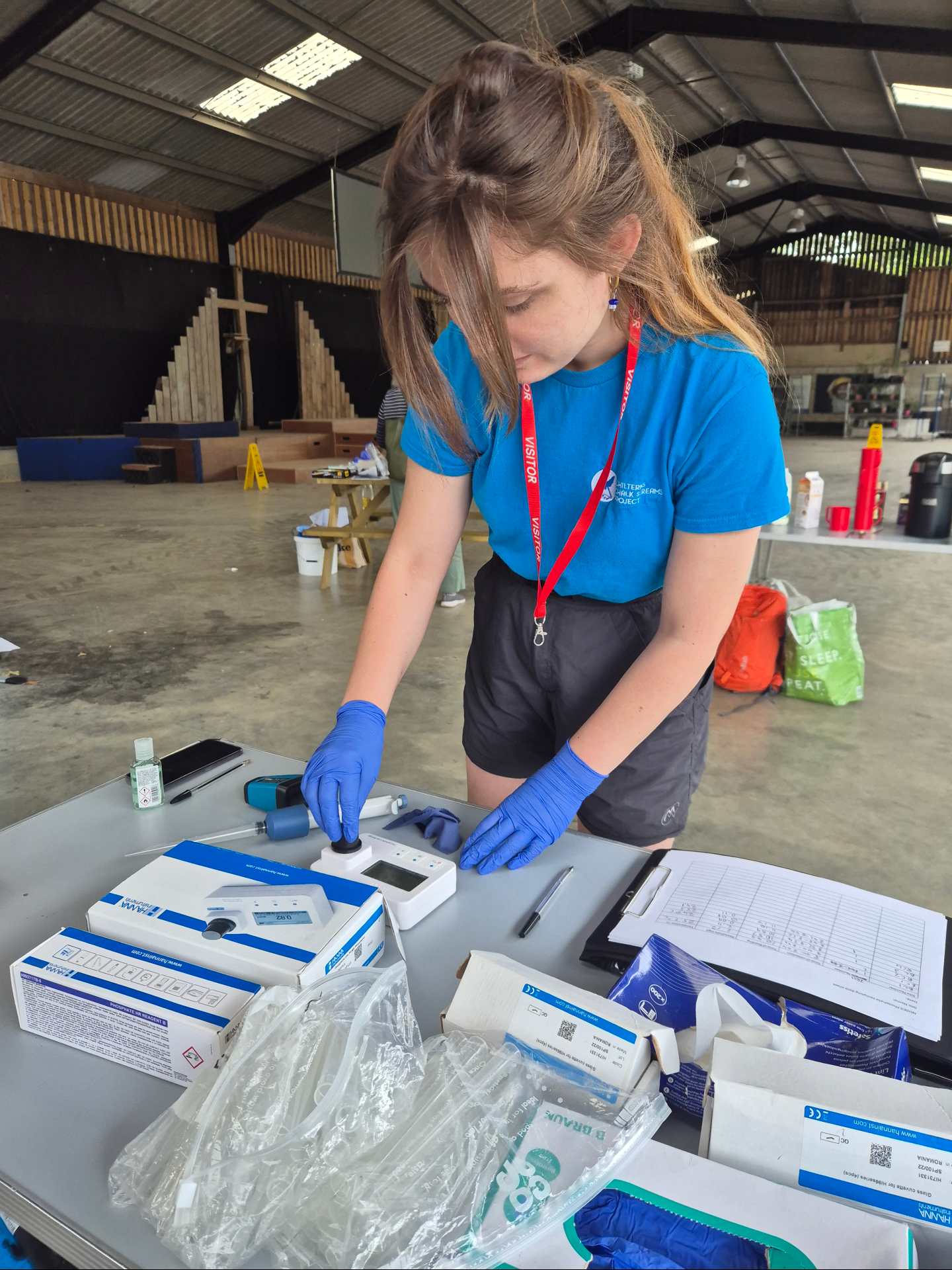
Testing phosphate levels in the collected water samples
When samples were taken on the 29th May, the expected phosphorus treatment at the Sewage Treatment Works had been resumed for two weeks, which made it a useful test of the rivers response.
The results were positive. Phosphate levels recorded in May were lower than those taken in the previous samples in October 2025, and had fallen from the high levels found during the gap in phosphorus stripping. Once again, levels in the main Chess were comparable with Little Chess. This suggests the new process has been successful in lowering phosphate levels back down again.
The maps below show the results from October 2025 and May 2026:
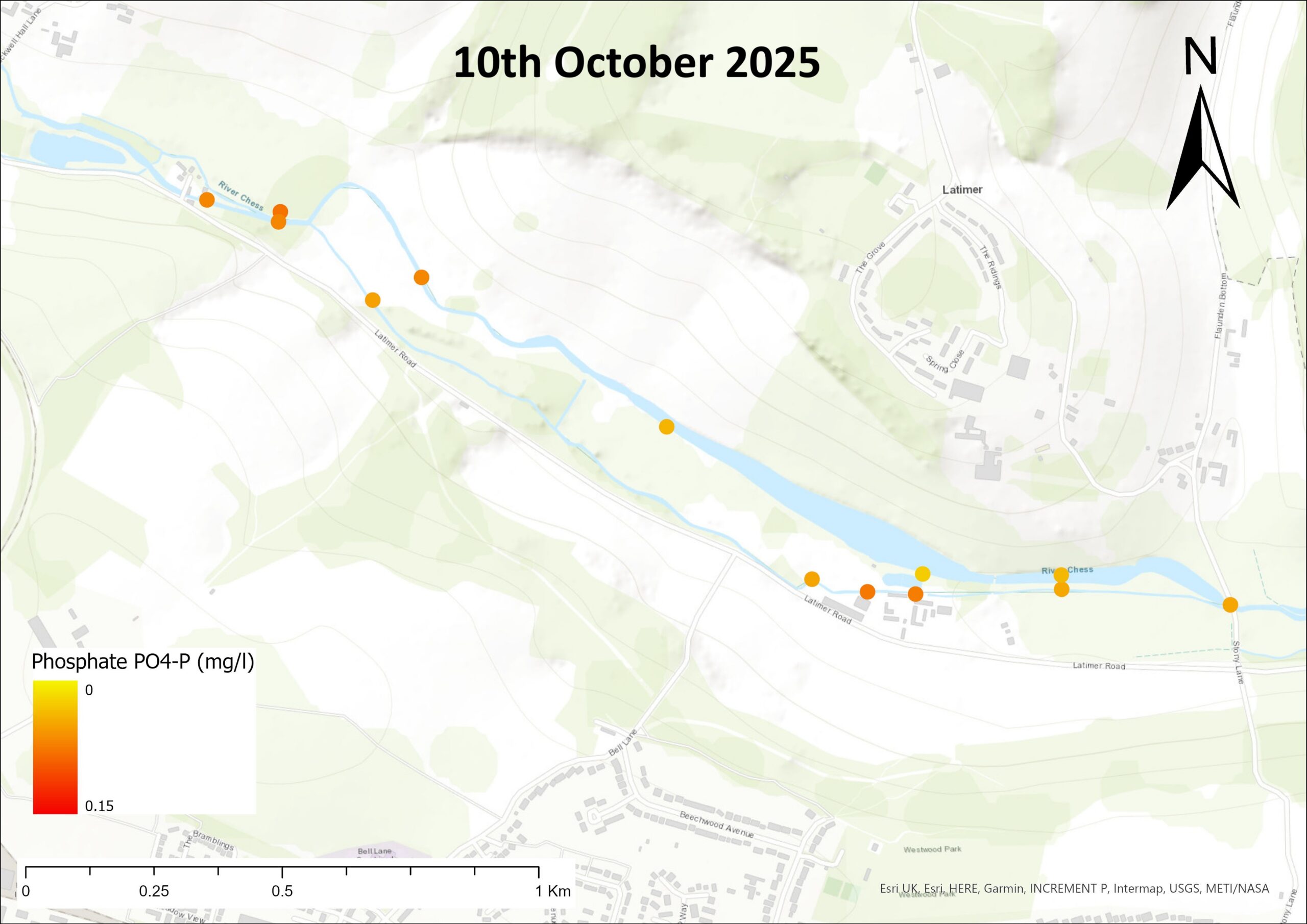
Results from the phosphate testing on 10th October 2025 (Credit: Iona McMillan, CCSP)
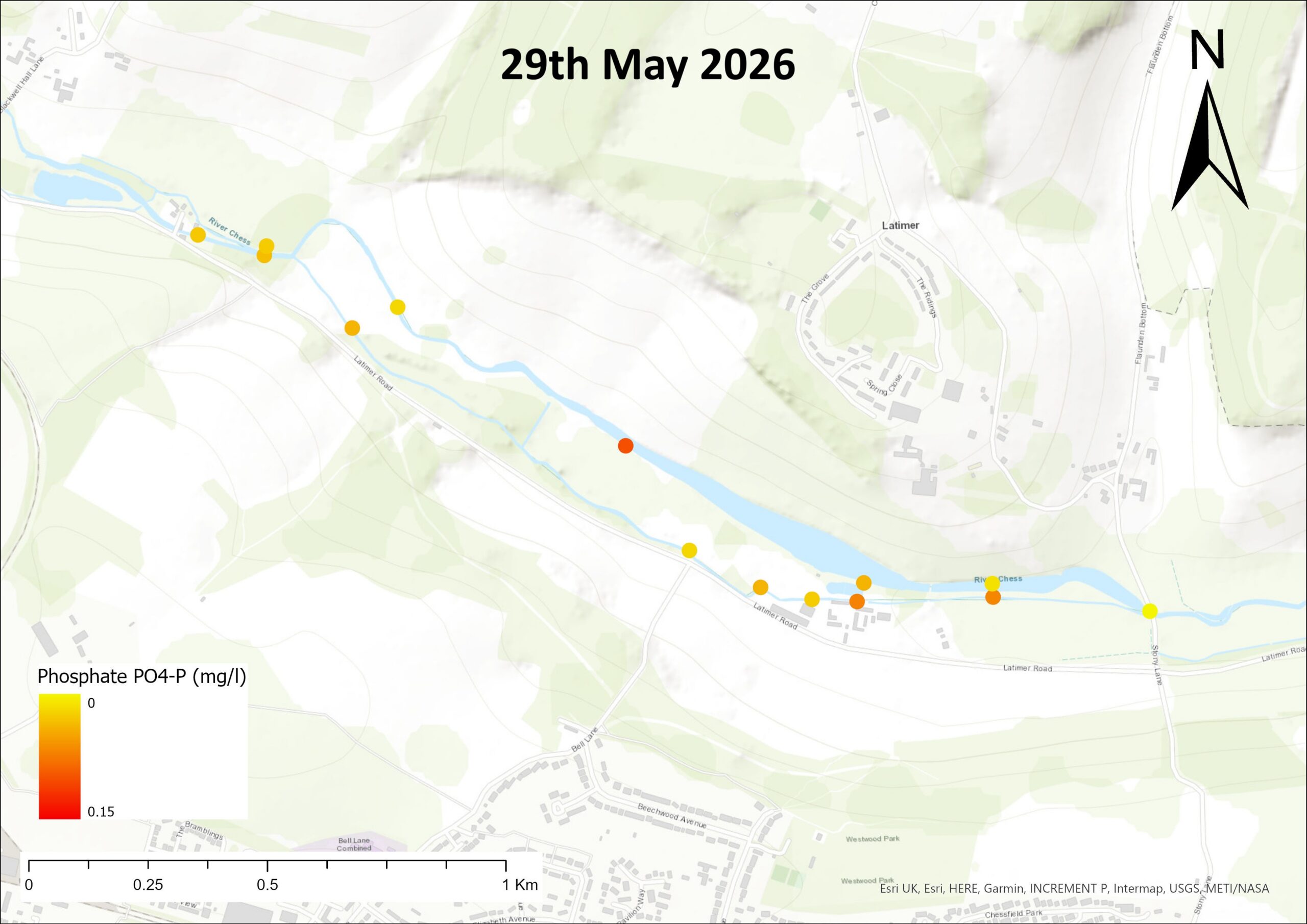
Results from the phosphate testing on 29th May 2026 (Credit: Iona McMillan, CCSP)
Citizen science is a vital way we can be eyes on the river, and work with partners to address problems and improve the status of our river. Every sample, observation and event adds to our understanding of these special ecosystems and how best to protect them.
If you are interested in volunteering, look below to find our Citizen Science and Events pages to see what’s coming up, and email us at chalkstreams@chilterns.org.uk to get involved.