
Collaborations with QMUL on the Chess
We work closely with Queen Mary University of London on the Chess Smarter Water Catchment project, including managing our continuous water quality monitoring network ‘ChessWatch’, and supporting many student dissertations and research projects. At our latest River Chess Citizen Science Evening we were joined by Laboratory Technician Megan Dougherty and recent graduates Chiara Buquicchio and Lewis Ingham, to explore research on nutrient and pollution dynamics in river water and sediments.
“Queen Mary University of London has been involved with the River Chess monitoring network alongside Chilterns National Landscape and Smarter Water Catchments since it was initiated in 2020. This work began primarily to investigate the Chesham Sewage Works, but also to understand how we can better protect and help chalk streams recover from stresses caused by climate change and human influence. The monitoring network consists of six sites, one upstream of CSW and five downstream at varying distances. At these sites, we measure a variety of water quality parameters such as nutrient contamination, flow velocity, and water level. Apart from our regular work for the monitoring network, Queen Mary also supports undergraduate and postgraduate research projects focusing on the health of the Chess, as well as field trips for master’s courses and activities such as Riverfly.” – Megan Dougherty, Laboratory Technician, QMUL
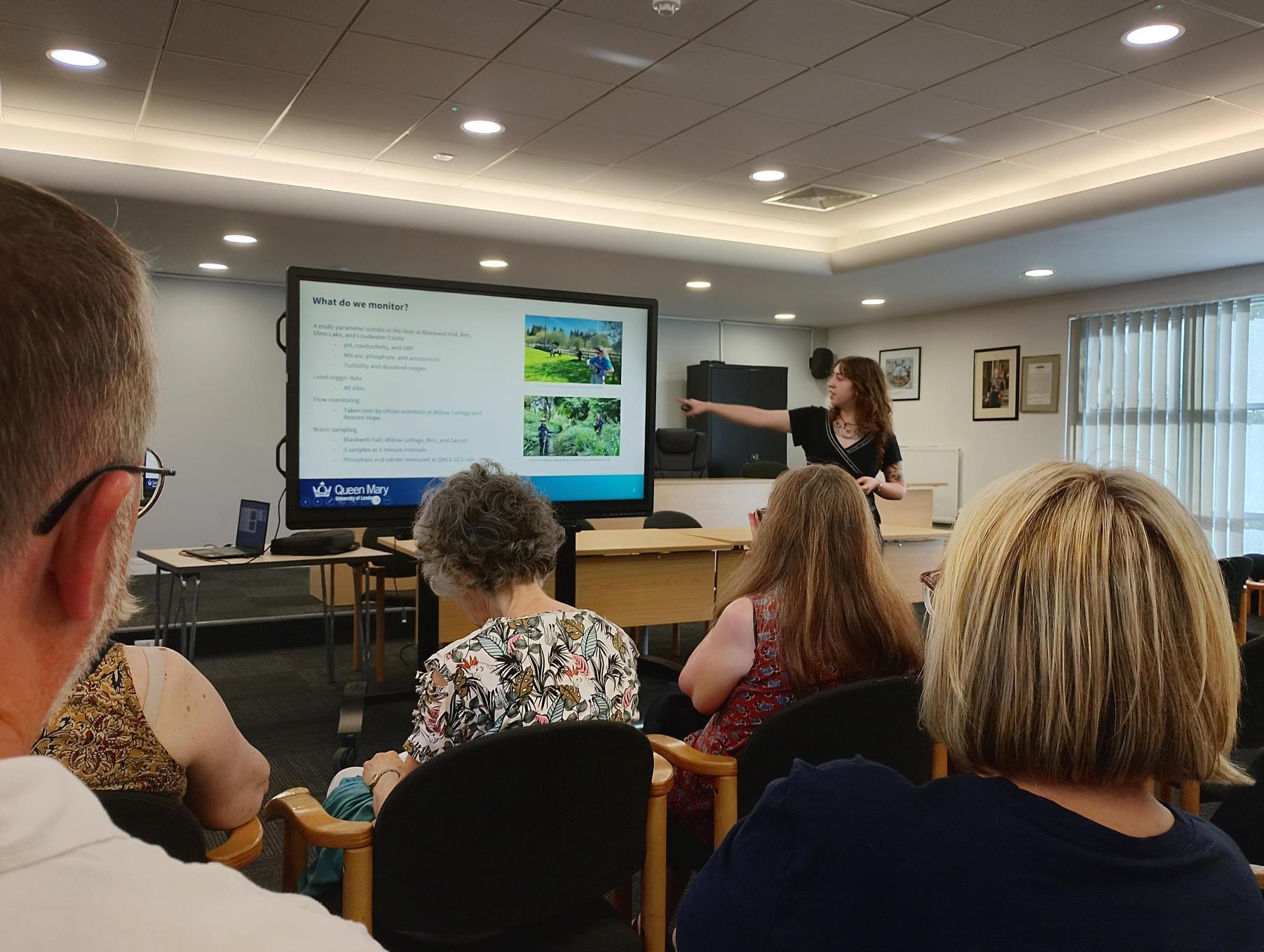
Megan Dougherty introducing the ChessWatch project at the Citizen Science Evening
“My research focused on phosphorus dynamics in the River Chess, looking at how the phosphorus-stripping upgrade at Chesham Sewage Treatment Works affected water quality downstream. I sampled water monthly from four sites between November 2023 and January 2026, measuring soluble reactive phosphorus and comparing results against Water Framework Directive status thresholds.
I found that only 33% of samples met Good or High WFD status, with 29% falling into the Poor or Bad categories. Phosphate stripping did reduce phosphorus concentrations downstream, but the exceptionally dry spring of 2025 showed that treating the sewage works alone isn’t enough, as low river flow and reduced dilution let runoff from farms and roads become the dominant source of contamination. Overall, I concluded that point-source treatment needs to be paired with wider catchment management, including riparian buffer zones and a review of groundwater abstraction, to properly address water quality in the River Chess.” – Lewis Ingham (BSc Geography)
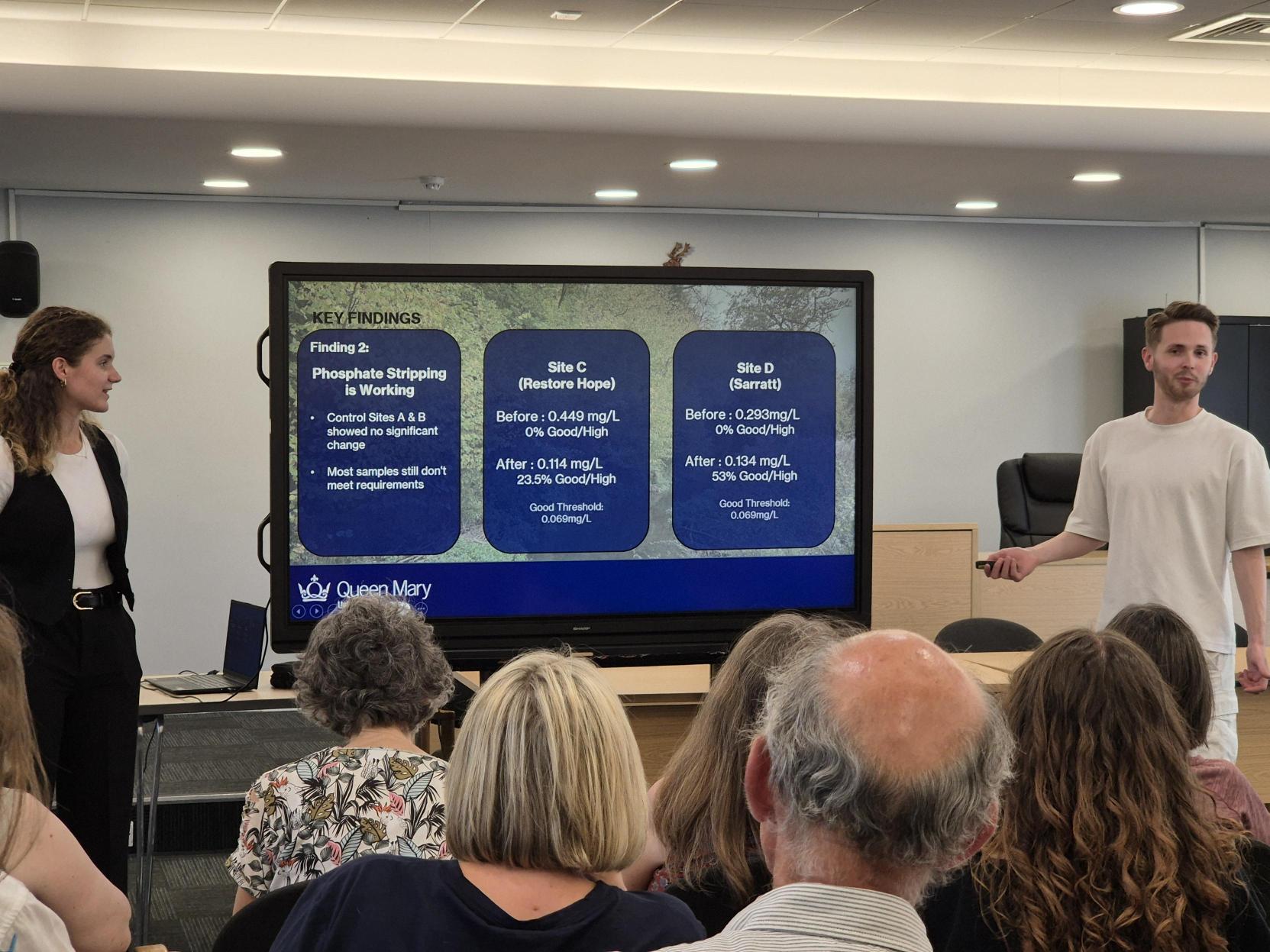
Chiara and Lewis presenting at the Chess Citizen Science Evening
“My research was based on bed-sediment quality in the River Chess, focusing on how the phosphorus-stripping upgrade at Chesham Sewage Treatment Works may have affected nutrient and metal contamination downstream. I collected sediment samples in October 2025 from one upstream control site and two downstream sites, then analysed bioavailable phosphorus, trace metals, organic matter and sediment properties before comparing the results with sediment quality guidelines.
I found that bioavailable phosphorus and organic matter were highest at the downstream sites, which showed that the treatment works was a major source of nutrient enrichment to the riverbed. In contrast, lead and some other metals were highest at the upstream site, suggesting that different contamination sources were affecting the catchment, including legacy inputs and fine-sediment accumulation. Overall, I concluded that the River Chess is nutrient-enriched rather than acutely toxic, and I recommend continued sediment monitoring alongside wider catchment management (i.e. Chalk-Stream-Specific Sediment Quality Guidelines) to better understand how conditions may change over time.” – Chiara Buquicchio (BSc Environmental Science with Business Management)
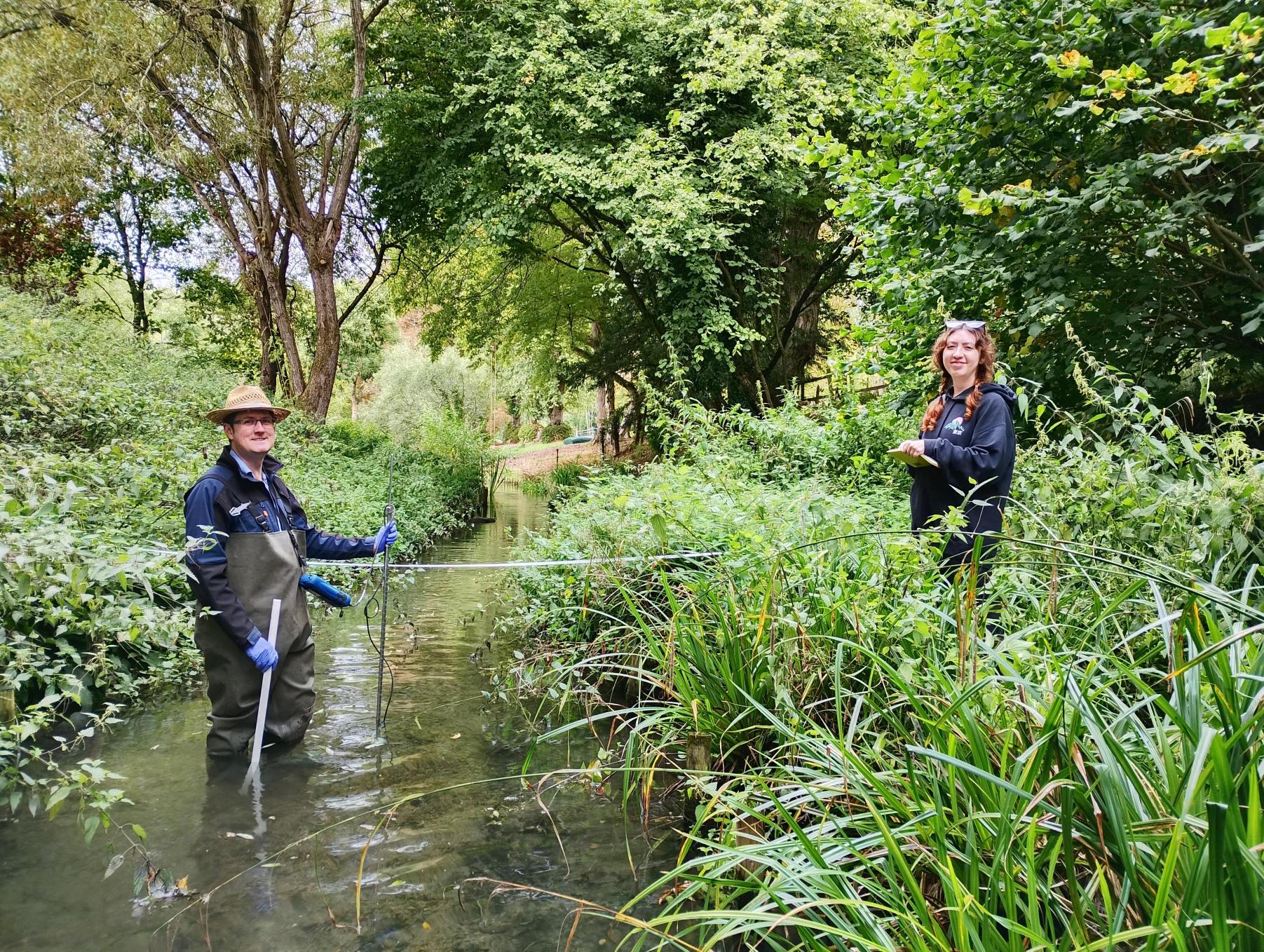
Dr Tom Kelly and Megan Dougherty flow monitoring on regular Chess fieldwork visits
If you are interested in finding out more about the research projects we are involved in or have research you would like to conduct on chalk streams, then please email us at chalkstreams@chilterns.org.uk